Indian Art Market’s Love for the 1950s-1960s-2
Share
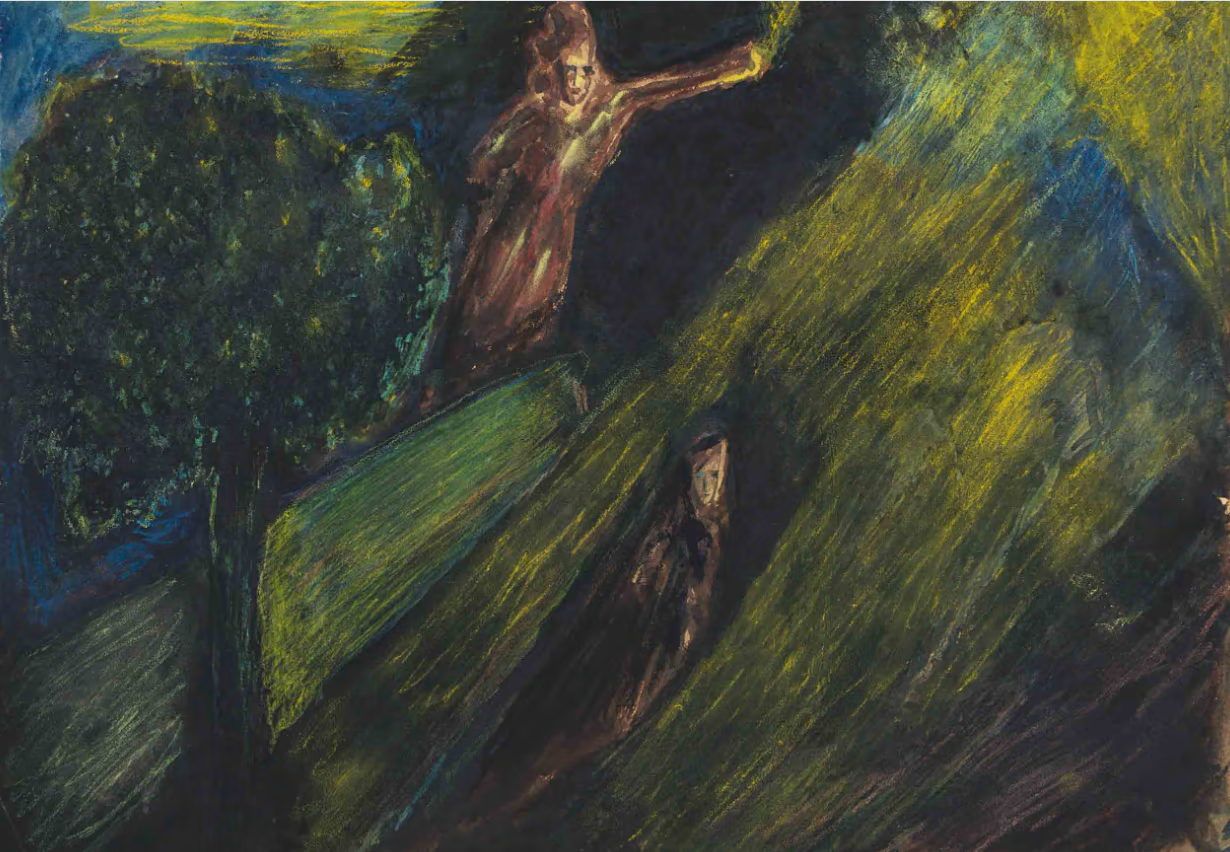
Houses in Hampstead by F. N. Souza, oil and polyvinyl acetate on canvas,1962. Sold for Rs 67.5 crore (GBP 5652000) at Sotheby’s in London, September 30, 2025. Image courtesy: Sotheby’s
The Indian art market’s fascination for modern works of art produced in the Fifties and Sixties bring into focus the richness and depth of Indian art in that period
As the year 2025 winds down, we can look back at all the auctions of Indian art that have taken place globally and re-do the list of top selling works of modern and contemporary Indian art. Yes, several records were broken in the auctions this year, as the following list shows. Out of 11 works that entered the Top 10 list (two works share position number 4), as many as 6 were sold for record prices in the year 2025. And all of these occupy the first six positions, from #1 to #6.
India’s most expensive artworks, as of November 2025, are as follows:
- Untitled (Gram Yatra) by M. F. Husain, oil on canvas, 1954. Sold for Rs 118.62 crore (USD 13,750,000) at Christie’s in New York, March 19, 2025.
- Houses in Hampstead by F. N. Souza, oil and polyvinyl acetate on canvas,1962. Sold for Rs 67.5 crore (GBP 5652000) at Sotheby’s in London, September 30, 2025
- Untitled by V. S. Gaitonde, oil on canvas, 1970. Sold for Rs 67.08 crore, (USD 7,579,661) at Saffronart in New Delhi, September 27, 2025.
- The Storyteller by Amrita Sher-Gil, oil on canvas, 1937. Sold for Rs 61.80 crore (USD 7,445,783) at Saffronart in Mumbai, September 16, 2023.
- Trussed Bull by Tyeb Mehta, oil on canvas, 1956. Sold for Rs 61.80 crore (USD 7,270,588) at Saffronart in Mumbai, April 2, 2025. *
- Emperor by F. N. Souza, oil on board, 1957. Sold for Rs 61.7 crore (GBP 5,164,000) at Sotheby’s in London, September 30, 2025.
- Trussed Bull by Tyeb Mehta, oil on canvas, 1956. Sold for Rs 56.4 crore (USD 6,372,881) at Saffronart in New Delhi, September 27, 2025. *
- Kallisté by S. H. Raza, oil on canvas, 1959. Sold for Rs 46.76 crore (USD 5,619, 900) at Sotheby’s in New York, March 19, 2024.
- Gestation by S. H. Raza, acrylic on canvas, 1989. Sold for Rs 45 crore at Pundole’s in Mumbai, August 31, 2023.
- Untitled by V. S. Gaitonde, oil on canvas, 1969. Sold for Rs 42 crore at Pundole’s in Mumbai, February 24, 2022.
- Untitled (Bull on Rickshaw) by Tyeb Mehta, acrylic on canvas, 1999. Sold for Rs 41.97 crore (USD 5,596,000) at Saffronart in Mumbai, April 6, 2022.

Untitled (Gram Yatra) by M. F. Husain, oil on canvas, 1954. Sold for Rs 118.62 crore (USD 13,750,000) at Christie’s in New York, March 19, 2025.
As a cursory look of the above list makes amply clear, the Indian art market has a special liking for works of art created in the 1950s and 1960s. Of the 11 works listed above, as many as 7 hail from these two decades (a total of 8 if we include one canvas from 1970, which can be considered from the same period).
The auction results are but a reflection of the major truth of the art scenario (not the complete truth, obviously). The 1950s and the 1960s remain the most sought after periods for works of Indian art for various reasons.
It is well-known in the art circles that as India was inching towards its political independence from colonial rule, most of the other sectors of life social, economical, etc.too were unwittingly preparing for a break from colonial influence. Freedom was in the air and it did not leave any aspect of life untouched.
The world of art was no different. Even though European academic realism continued to be taught in the prominent art schools of the Indian subcontinent, Indian artists had long started breaking free of that influence. The ‘back-to-Indian roots’ movement had been initiated in Bengal with the formation of the Indian Society of Oriental Art in 1907 by Abanindranath Tagore, which in itself was a part of the Swadeshi movement that had been initiated as a direct reaction to the division of Bengal on communal lines by the British in 1905. In the next four decades, revivalism of Indian ethos in art would take several turns and meanings, and the idea would penetrate all corners of the country. By the time India became independent of British colonial rule, in 1947, a new generation of young Indian artists was getting vocal about its interpretation of art—while it rejected European ethos on the one hand, on the other it rejected Bengal revivalism as well that had taken inspiration from India’s ancient art, as espoused in the cave paintings of Ajanta and Ellora.

Untitled by V. S. Gaitonde, oil on canvas, 1970. Sold for Rs 67.08 crore, (USD 7,579,661) at Saffronart in New Delhi, September 27, 2025.
This new generation of Indian artists was free, fierce, bold and ready to embrace modernism that was ruling the roost in Europe and the US, while still staying rooted in Indian sensibilities, especially in the choice and application of colour. No wonder, the art produced by this generation of artists, who were young and raring to go when India attained independence, shone brightly then, and as markets have proved, continues to shine brighter.
The most prominent names from this period are, of course, the Progressives from Bombay, such as F. N. Souza, M. F. Husain, S. H. Raza, Tyeb Mehta, V. S. Gaitonde, all of whom figure in our Top 10 list. But, in other parts of the country too, this wave of freedom of artistic thought had begun to blow and its results would soon show in their works as well.
It would be interesting to go through the works created by stalwarts of Indian modern art during this period, from the late 1940s onwards but most specifically from the 1950s and 1960s. In the next part of the story, TAG will discuss in detail the continued romance of India’s art market with the 1950s and 1960s.