The Met, NY, Brings Focus on Prints of Hindu Gods in Household Shrines

Share

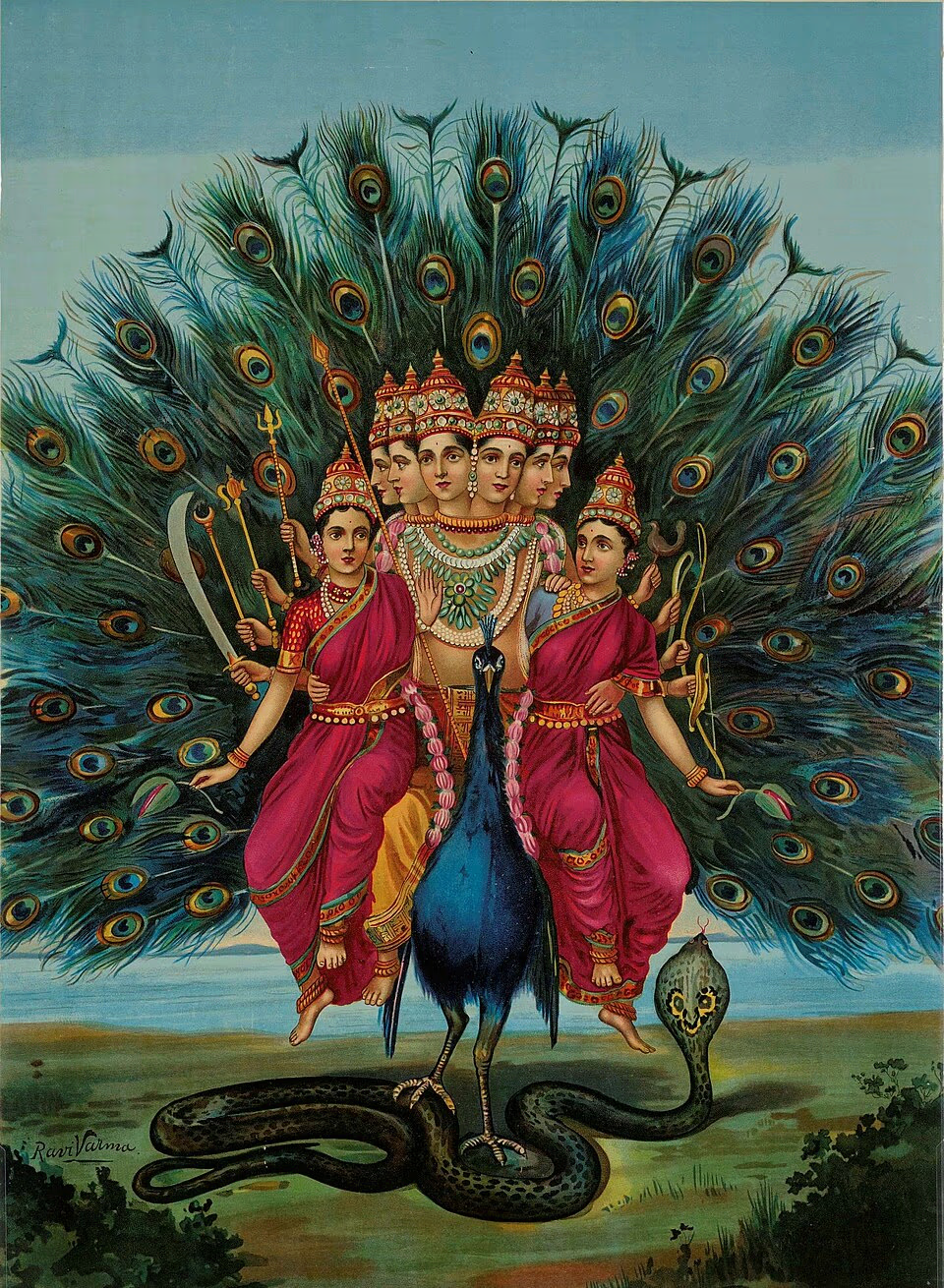
Hindu deity Kartikeya or Murugan with his consorts on his Vahana, the peacock. A chromolithograph by Raja Ravi Varma, made at his Ravi Varma Press, Bombay. Image courtesy: Wikipedia
The exhibition, opening on January 24, 2026, presents chromolithographic prints of Hindu gods and goddesses from pioneering printing presses
It is common knowledge that what we know as the physical form of Hindu gods and goddesses owes largely to the imagination of Raja Ravi Varma, one of India’s nine National Treasure artists, who is also the first modern painter of India. It was Raja Ravi Varma (1848-1906), who not only first prolifically painted images of Hindu gods, goddesses and myriad mythological characters, but also made them easily accessible to millions of households across the subcontinent through prints chromolithographs and oleographs that he printed at his Raja Ravi Varma Press in Bombay. While the was the most successful artist in this genre, there were other printing presses across the country working in the same field.
An exhibition of the prints of Hindu gods and goddesses from these printing presses is opening at the Metropolitan Museum of Art, New York (The Met, NY), on January 24, 2026. It will be on view through June 27, 2027.
According to information shared by The Met, “Household Gods: Hindu Devotional Prints, 1860–1930 presents the first encyclopedic exhibition of these chromolithographic prints from the pioneering studio presses of Calcutta (Kolkata), Poona (Pune), and Bombay (Mumbai). These mass-produced prints became a powerful means of expressing Indian religious identity at a time when the country was experiencing the first stirrings of the Independence movement.
Featuring approximately 120 works, shown in four rotations, from The Met’s collection of chromolithographic prints, along with paintings and portable triptych shrines, Household Gods provides a unique window on the vibrant tradition of Indian devotional imagery on the cusp of modernity.”