Latika Katt’s Final Act: A Masterstroke As Always

Share
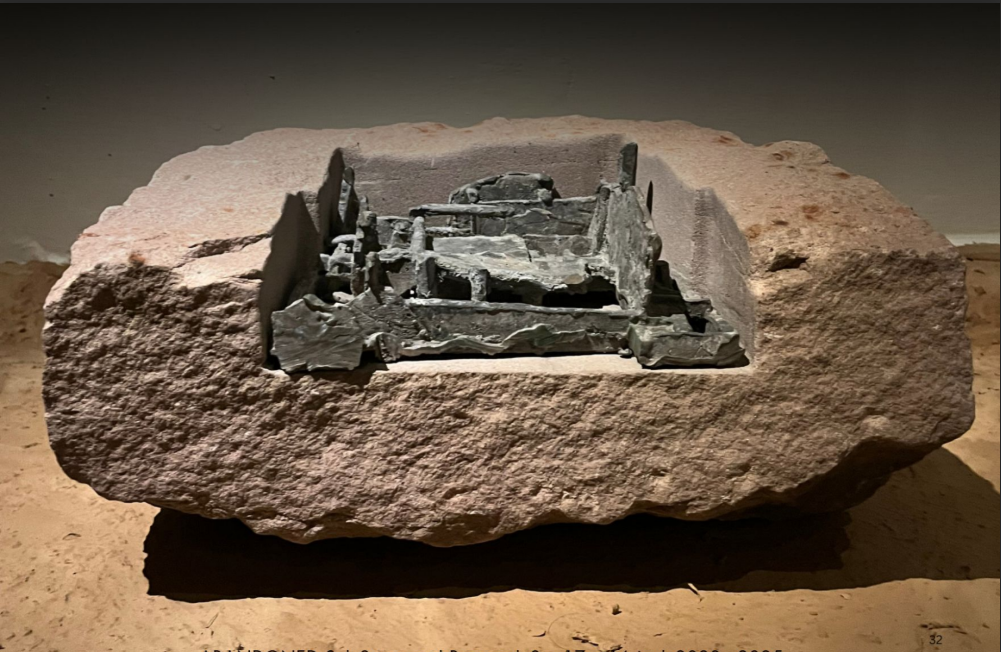
‘Abandoned 6’, by Latika Katt, stone and bronze, 8 x 17 x 16 in., 2023-2025, presented by Threshold Gallery, New Delhi
The recently concluded show of Latika Katt’s final works, ‘Abandoned’ at Threshold Gallery, presented powerful works by the late artist known for the gravitas and conviction of her sculptures
In all the years that I have been writing on art, I have had a wish list of the artists I would definitely want to meet and spend time talking to. The list is a work in progress and I’m thankful that my writing profession has provided me with such opportunities. However, one artist was added to my list rather recently. That was because I wasn’t familiar with her work until very late in my career. That’s my misfortune but in hindsight, I feel glad that I got introduced to her work while once browsing through an overwhelming inventory of a gallery based in New Delhi.
That artist was Latika Katt.
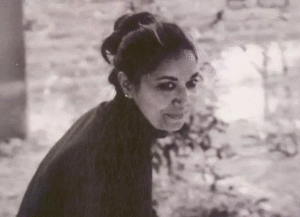
(A young Latika Katt. Image credit: Latika Katt, Metaphors of the Inner Realm)
The specific work that really got me interested in her art because of the profound depths that it was capable of going into, was the papier-mâché installation titled Sati. Made primarily of papier-mâché but also comprising elements in white clay, bamboo, iron rod structure, organic preservatives and resin, it measures 37.5 x 36.5 x 8.2 inches and was created in 1993. As might already be evident, this work is in memory of the last incident of Sati in India, in which a young bride, Roop Kanwar had burnt herself on the funeral pyre of husband, on September 4, 1987. The incident had caused widespread anger in India and soon led to the enactment of the Commission of Sati (Prevention) Act, 1987, which outlawed and criminalized the act of Sati and its glorification.
Katt responded with her installation, which will prove to be a sturdier reminder of the incident and its subsequent outlawing, long after the news itself is forgotten.
Latika Katt, born 1948, was one of India’s most prominent sculptors, and also one of the earliest, who had to defy social norms to be able to study sculpture; she grew up in Dehradun and studied arts at Banaras Hindu University, M. S. University, Baroda, and Slade School of Art, London. She was the first female student to receive a gold medal in sculpture from MSU, Baroda. The art, definitely more physical than painting, was not considered appropriate for women not too long ago and Latika Katt had to prove herself more than the others to study sculpture. It is this spirit that ensured her subsequent rise as one of India’s most important artists working in sculptures.
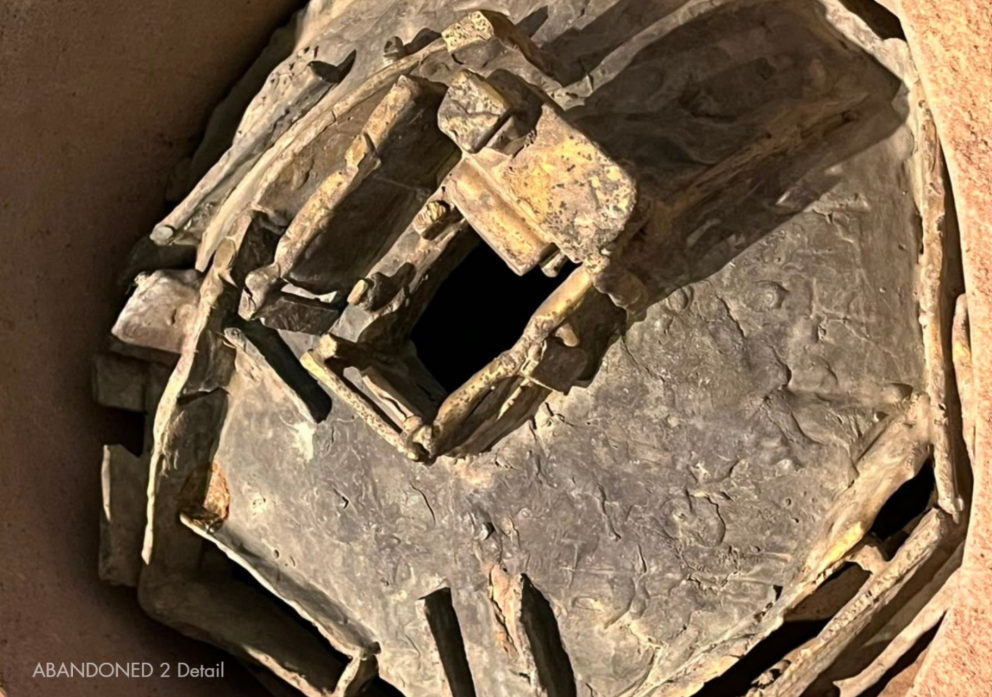
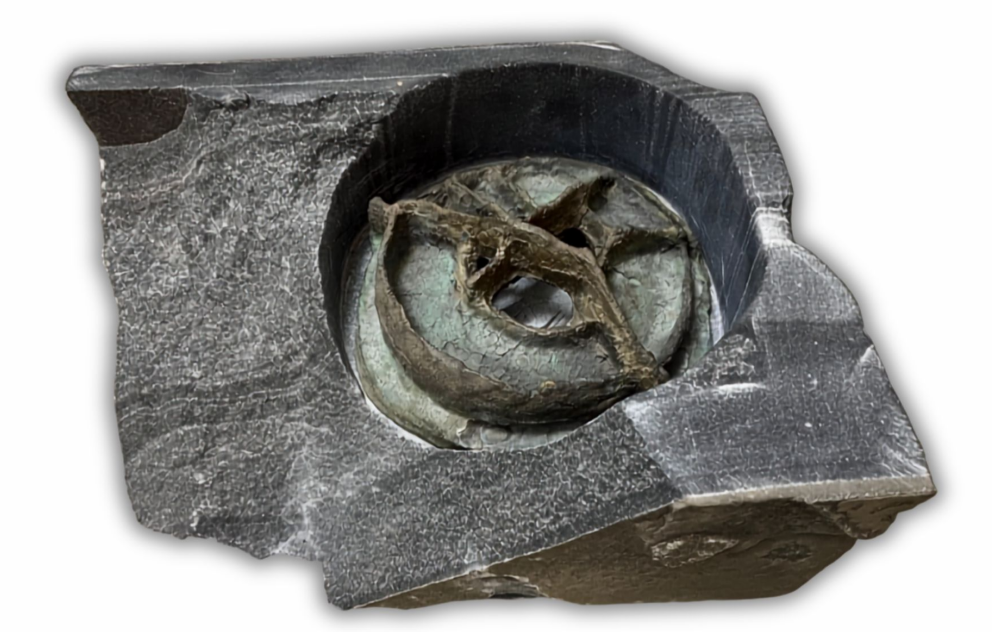
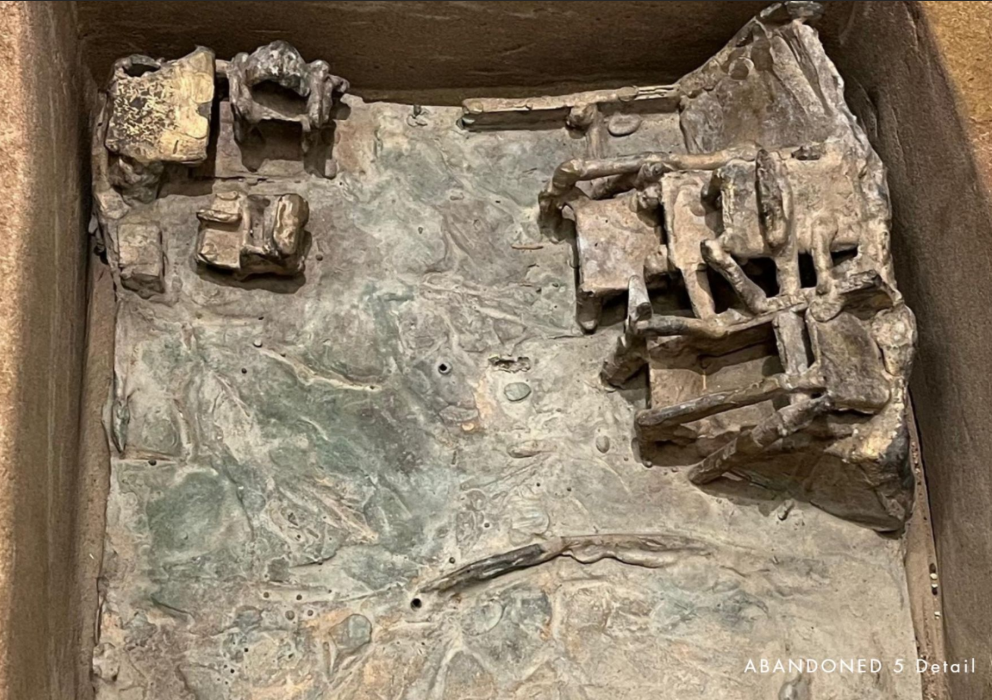
It is in this context that the recent show at the Threshold Gallery, featuring Latika Katt’s last body of work, assumes great importance. Titled ‘Abandoned’, it presented the artist’s finale, as it were, because a majority of the sculptures at the exhibition were created in the years before she passed away on January 25, 2025. The most striking aspect was that they were made in stone and bronze, a combination that pits two strong primary materials for sculpture in conversation with each other.
Katt had earlier used the two together when she responded to deaths due to COVID-19 pandemic, with corpses washing up the shores of the Ganga in Varanasi, the city where she was based for most of her later life. She created highly disturbing works showing dead bodies in bronze lying on surfaces of stone.
The works at ‘Abandoned’ are equally powerful, though differently. In these works, huge blocks of stone have been hewn out in a cupule to place sculptures in bronze. The distinct materiality of the two creates a picture that resonates with the viewer long after having seen the show. The experience is of discovering a piece of something that was abandoned long ago, and has survived over centuries in the womb of the earth, the stone. It appears as if the artist carefully scraped the surface of the stone to reveal what it ensconced within. The exhibition evokes a rather archaeological perspective in the viewer’s mind.
Many of the ‘found’ bronze sculptures within the stone cupule remind one of some of her best works from the 1990s onwards. Their juxtaposition with stone proves that the artist, even in her final years was constantly evolving and experimenting to create powerful imagery for Indian art.
Tunty Chauhan, director of the Threshold Gallery and the show curator, said, “It is a rare privilege to host a posthumous exhibition of Latika Katt, an artist of such fierce conviction and command over her material, who took up the most physical of the arts entirely on her own terms, refusing every limit placed on it, including those placed on her.”
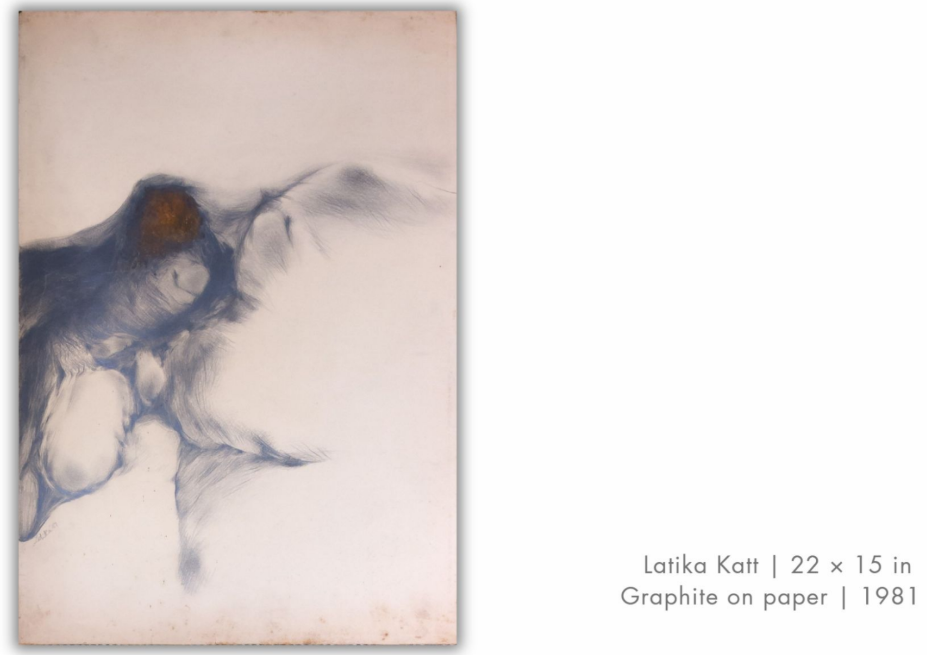
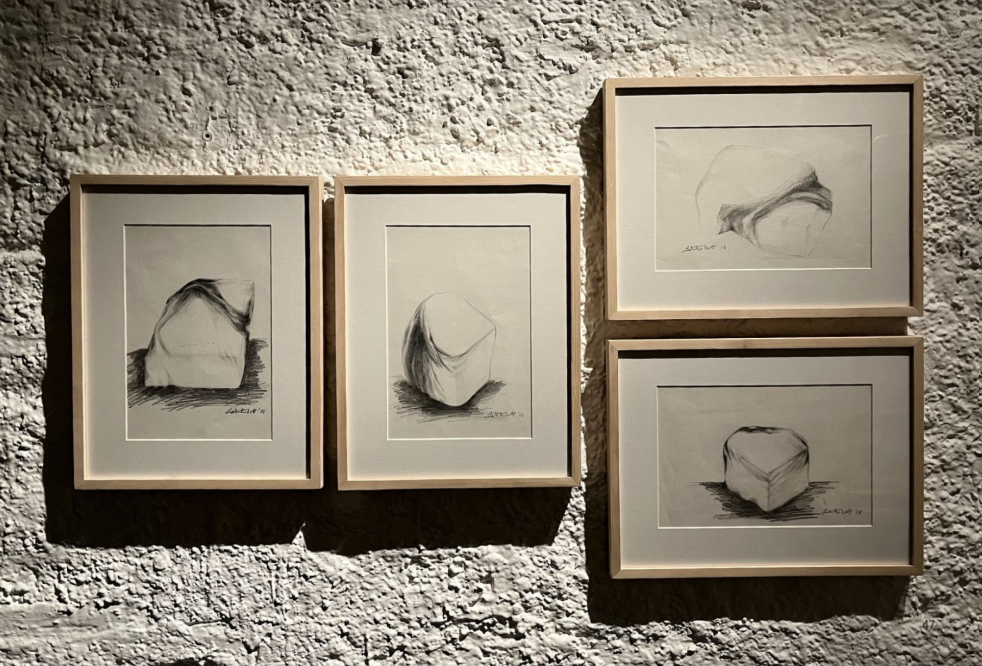
Another juxtaposition that makes the show masterly is the presence of some of Katt’s early drawings in graphite, from the 1980s to as recent as 2018. These are abstract representations of primarily rocky formations in nature. Said Chauhan, “The idea of placing the sensitive drawings next to her ‘Abandoned’ series, completed at the very end of her life, was to show the two dichotomies of her own personality. The hard abrasive tough exterior and a very generous sensitive soul. Latika gave everything she had to this material. It is a privilege to hold that final act of making at Threshold.”
Though the exhibition is over now, one hopes that the gallery will have many other occasions in near future to share these very powerful works by Latika Katt with the lovers of Indian art.