An Abstractionist’s Ode to His Rich, Native Landscape

Share
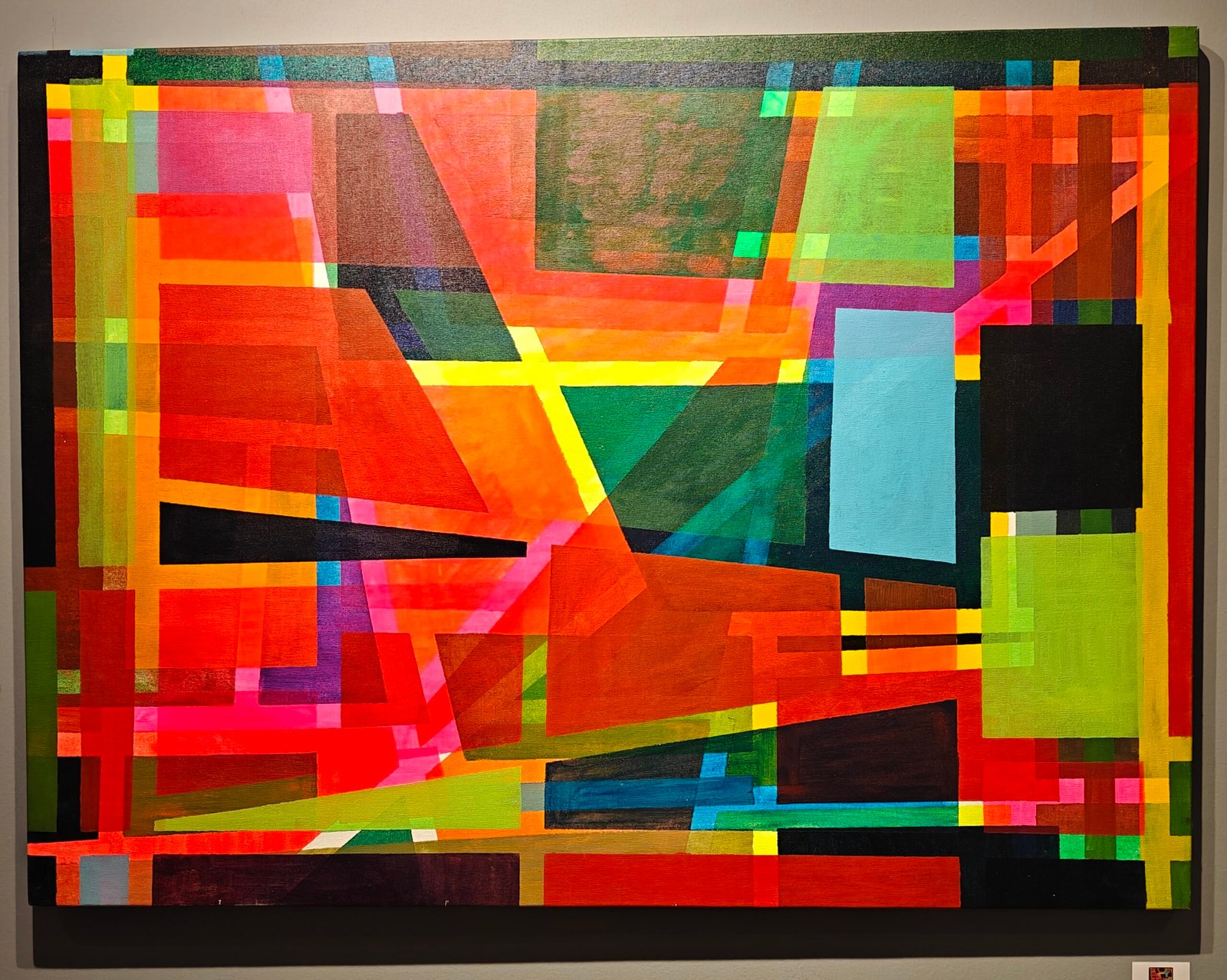
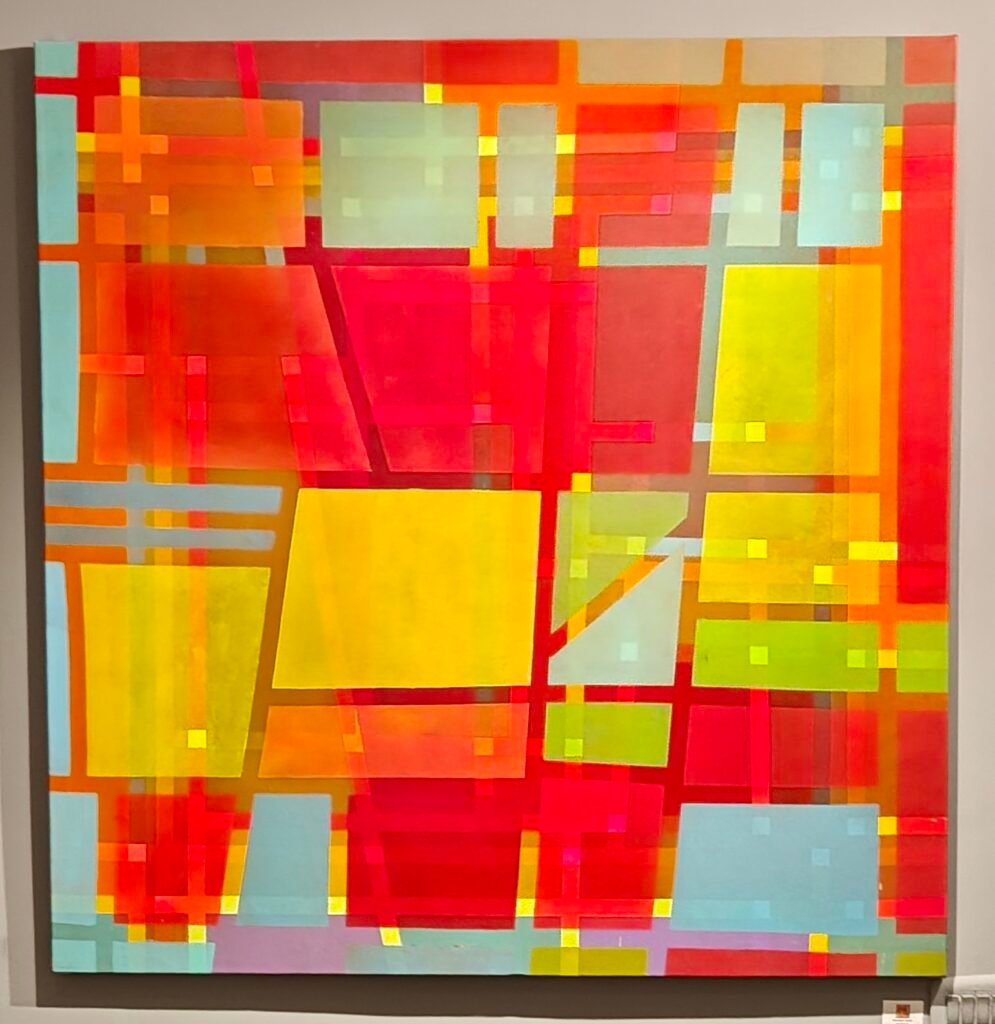
An Untitled work by Rafique Shah, on view at his ongoing solo, ‘Layer Upon Light’, at Arushi Arts, on view through September 7
Rafique Shah’s solo show brings focus on the wealth of abstractionist language emerging from Madhya Pradesh
There is something so thorough and methodical about abstraction from central India that it seems it is a genre that artists there are born into, unlike most others who reach a stage of abstraction by beginning with realism via gradual disintegration of form.
More often than not, I have reached this conclusion whenever there has been an opportunity to absorb the works of art from artists hailing from Madhya Pradesh. The solo, posthumous exhibition of the works of Afzal Pathan, held earlier this year at Shridharani Gallery in New Delhi, evoked the sentiment. And recently, I felt the same emotion when I visited the ongoing solo exhibition of the works by artist Rafique Shah.
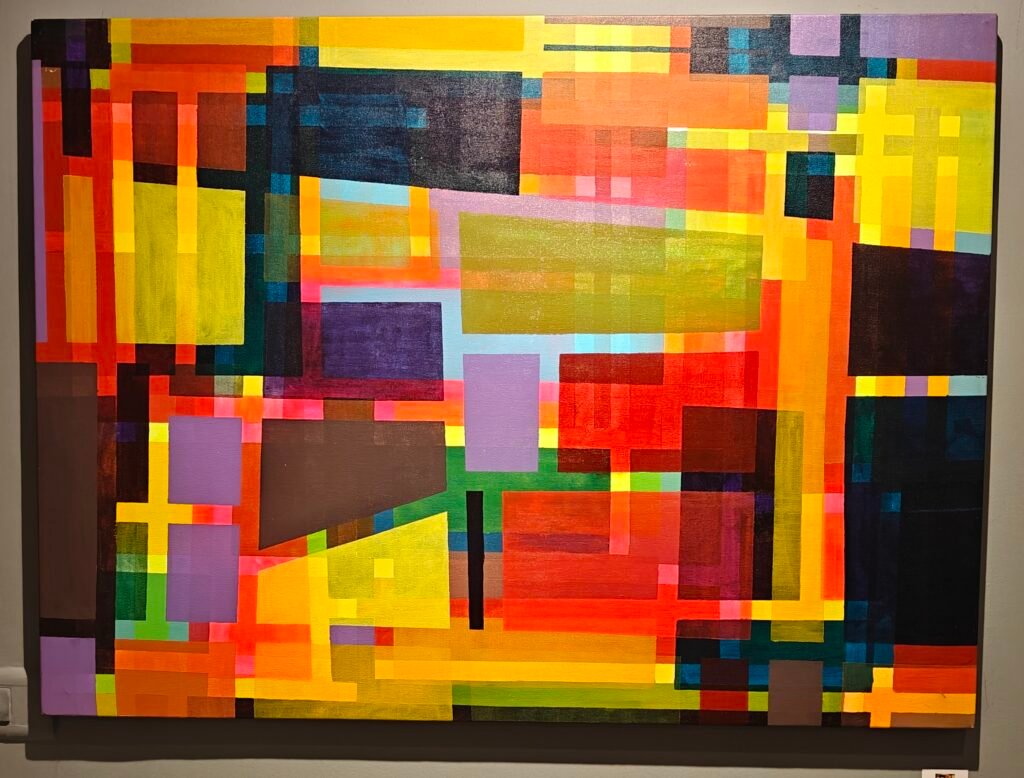
Titled ‘Layer Upon Light’, the exhibition of lively, colourful abstract canvases by Rafique is on view at Arushi Arts at G. K. II in New Delhi till September 7. It instantly draws in the viewer through an aesthetic yet a rapturous splash of colour all around. A plentiful display of canvases instantly brings spotlight on the current leitmotif of Rafique’s art—an expression of an urban grid with arterial roads criss-crossing at nodes which are highlighted in bright little squares.
I applaud him from not shying of colours, which has become a rather disturbing trend all around. “I paint my origins,” he says matter-of-factly. He is right because his dazzling canvases evoke the rich colours of India, central India to be precise—flaming oranges, reds and yellows of the Palash, Gulmohar and Amaltas flowers, striking greens of the rich foliage of the dense forests of Madhya Pradesh, and the purest blues of the skies of the land that is perhaps not yet disturbed by the so-called development that has robbed the larger cities of India of their blues and greens.
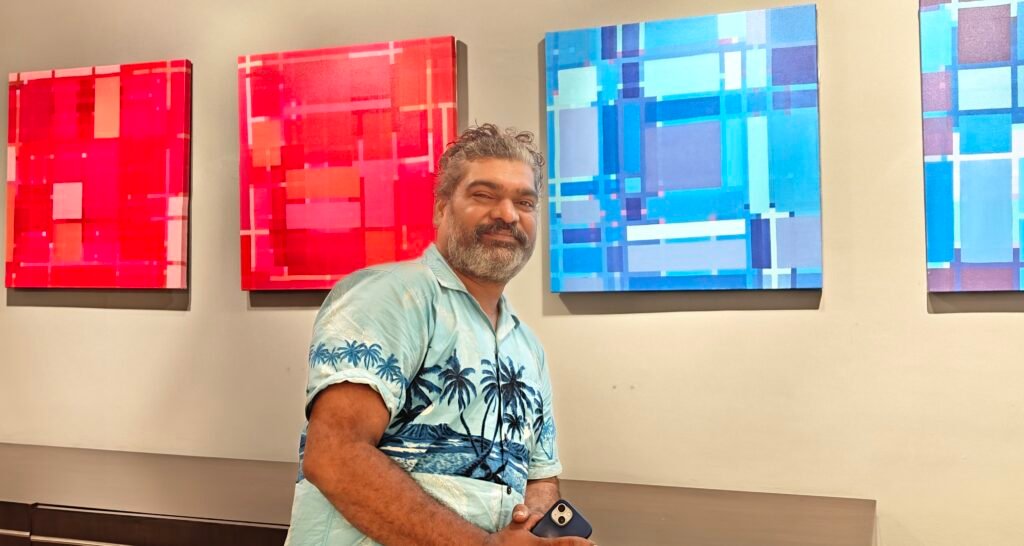
New Delhi-based Rafique was born in the small village of Satwas in Dewas district of Madhya Pradesh in 1984, and like many of his predecessors has boldly embraced the colours of his native landscape. The only difference is that his language is uniquely his, distinct from his realist predecessors as also the abstractionists before him. “I come from a family of faqirs, and my forefathers used to visit village homes to collect alms. I too went on such rounds with my grandmother when I was little but my father discouraged it. He wanted me to study, which I did. But art was not part of my upbringing even though I loved music, literature, poetry, and also loved to draw portraits and landscapes in school,” shares the artist. He went on to do his graduation from the Indore School of Art. He was drawn to the circle of practicing artists where he met his mentor, Akhilesh, the well-known Bhopal-based artist associated with Bharat Bhavan.
It was through portraits and landscapes that Rafique found his language of abstraction, which on one cursory look, suggests well-defined geometry, but is not exactly so. “Dada told me to develop what I was doing and soon I had developed the language that you see here,” says the artist, referring to his mentor Akhilesh fondly as the elder brother. Akhilesh once wrote about him, “Rafique paints with love and affection—love for painting and affection for the colours. One can feel that the juxtaposition of colours in his work is neither simple nor administrative. They invite you to come and travel with the lines to experience the unfolding relationship between two seemingly opposite colour tones… You cannot feel the simplicity and complex construction of these beginnings of a labyrinth. It’s a kind of netting that exists in Rafique’s imagination.”
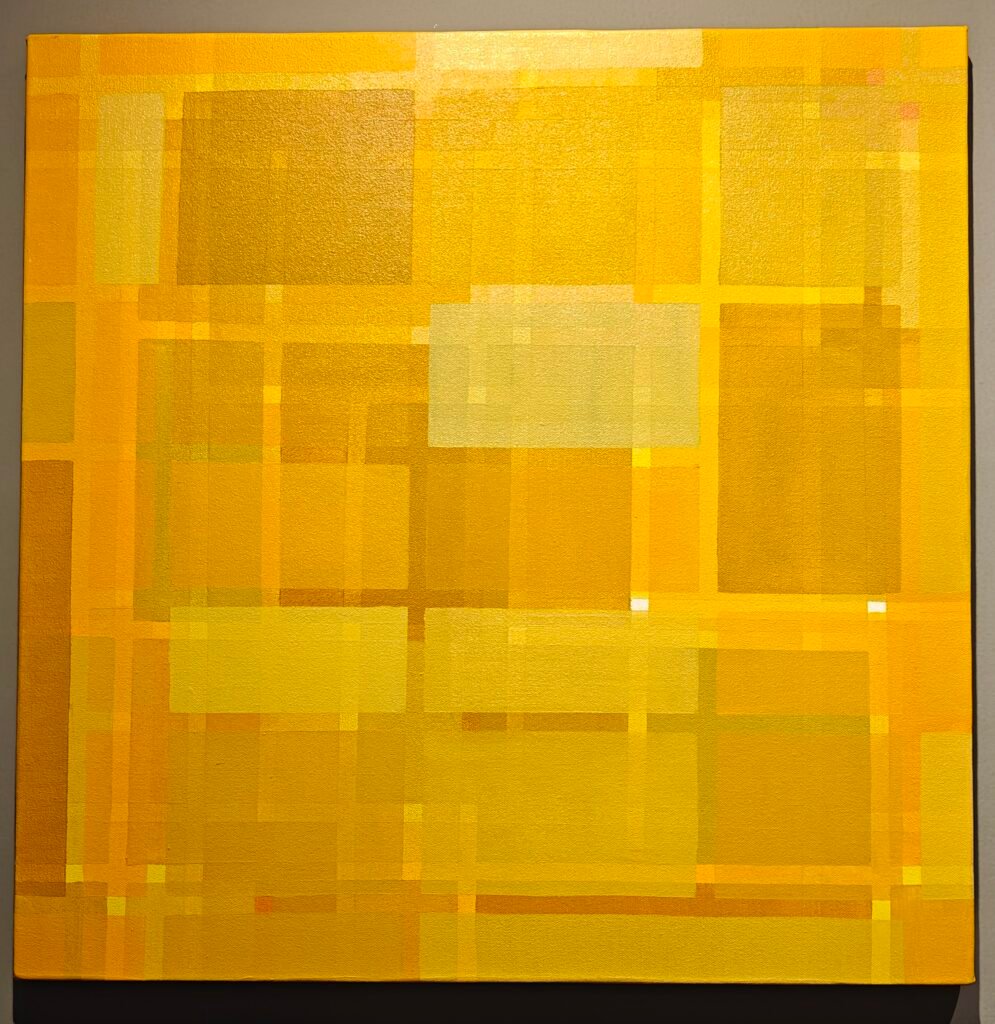
Of late, Rafique has taken the bold step of eschewing colours and creating his urban grids in washed out shades—white, cream, pale butter, with his characteristic small squares appearing in highly muted greys. I exclaim at his virtuosity but exhort him to not abandon colours altogether in future. He promises he will not.
I look forward to the growth of this extremely promising abstractionist from a part of India that has given this country some superlative abstractionists, some well celebrated, some unsung.
*The exhibition is on view through September 7, 2026, at Arushi Arts, W-23, G.K. II, New Delhi.