
Afzal Pathan: A Modern Master Who Deserved Better

Share

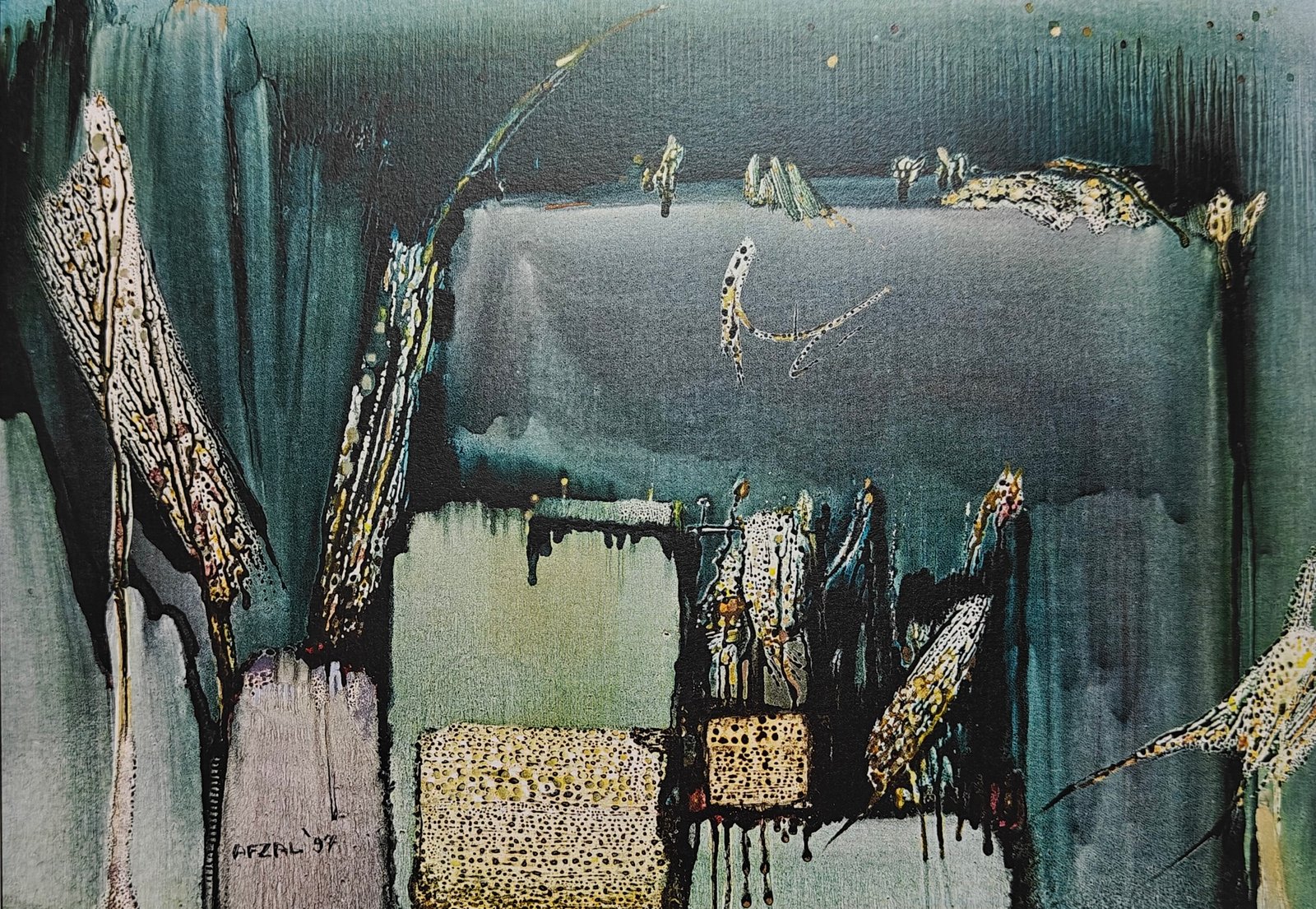
An Untitled work by Afzal Pathan, which was part of his solo show at Triveni Kala Sangam in June-July 2026
Afzal Pathan has remained an unheralded artist, whose brilliance should have dazzled the world outside his native Madhya Pradesh in his own lifetime
The Raza Foundation held a seminal exhibition earlier this summer, a solo show of the artist Afzal Pathan (1936-2000), whose name did not ring a bell at all when the invite first arrived. Even upon a cursory mental browsing of the masters who were his contemporaries, I did not recollect his name appearing regularly at any point in time in the national discourse. I was intrigued at the possibility of discovering the works of an artist I knew nothing about, and whose brilliance shone brightly through a sneak peek that a part of his painting offered on the invite.
It goes to the credit of the foundation and the curator of the exhibition, Akhilesh, for bringing such a stunning body of work to the connoisseurs in New Delhi. The only pity is that it was held for only a few days, from 30th June to 10th July, and I sincerely hope we will get a chance to see Afzal Pathan’s works again soon. A supplementary hope is that viewers across major art centres of the country will get to see his works in due course.
So, who was Afzal Pathan? And why did his works exude such a strong pull?
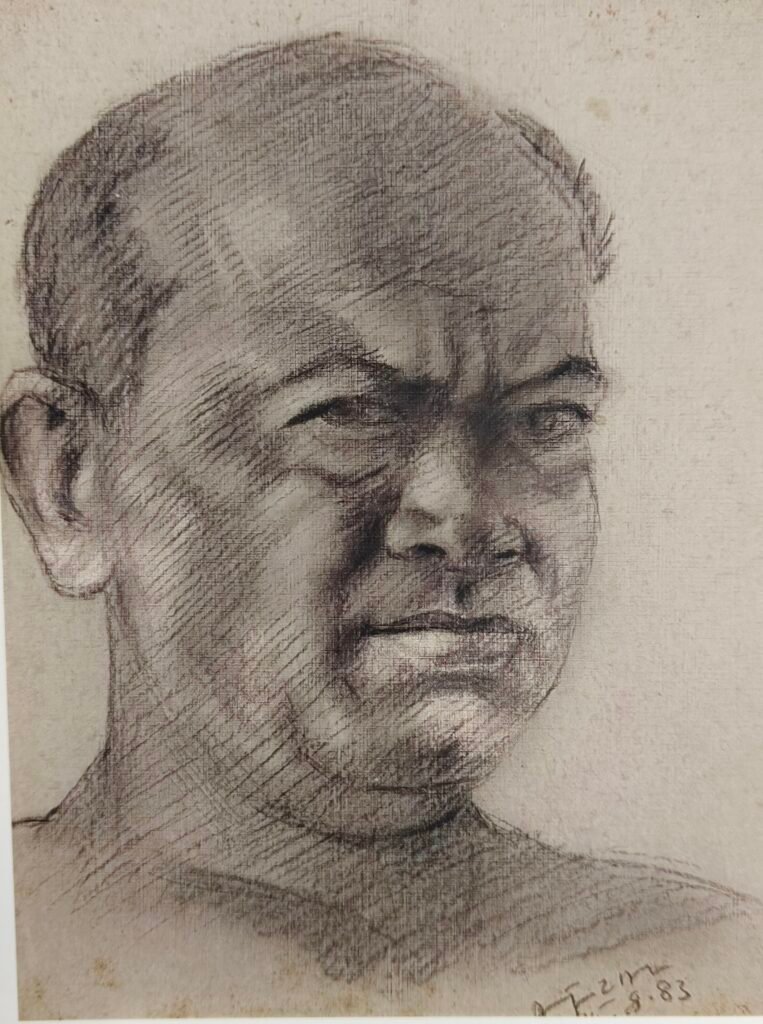
The catalogue, that was released along with the exhibition, offers deep enough insights into the personality of the late artist but stops short of a full-fledged discourse on his being and his art. That’s totally understandable because a catalogue can do only as much; an artist of this depth deserves a book, which, one hopes, will also be a reality some day.
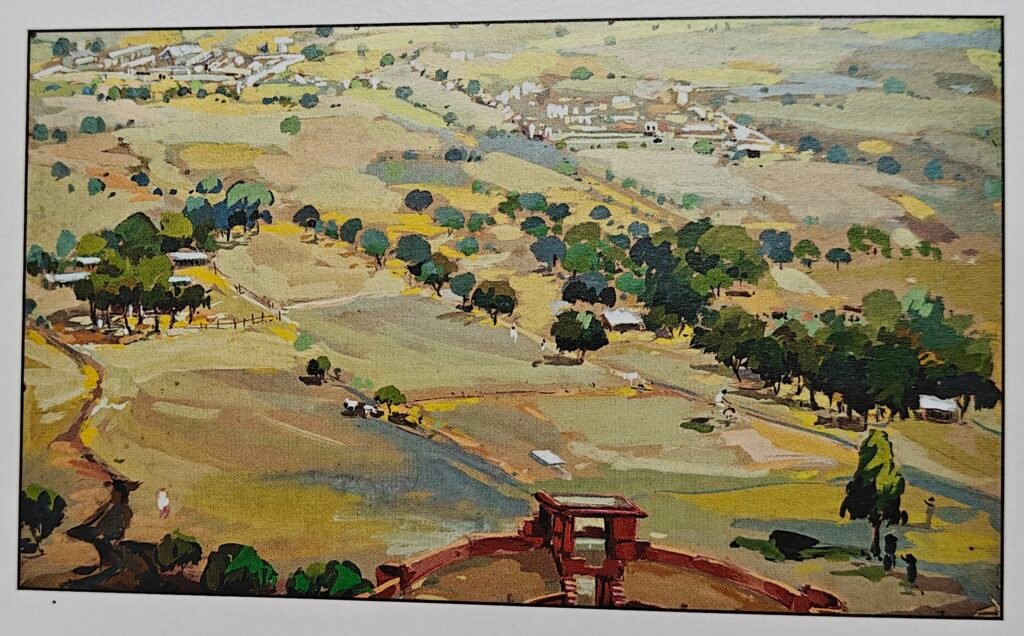
A detailed essay by Soumitra Das in the catalogue throws light on the life of Afzal Pathan, who was born in Dewas in 1936, when it comprised two separate princely states—Dewas Senior and Dewas Junior—under the British Raj’s Central India Agency. Proximity to Indore ensured that an artistically inclined boy like Afzal grew up to study at the Indore School of Art, which was affiliated to the Sir J. J. School of Art, Bombay. One of his teachers was Vishnu Chinchalkar (1917-2000), who made a great impact as a teacher to generations of artists emerging from central India. Das writes that for his examination, Afzal had to make his submission to Sir J. J. School, where one of the teachers was Walter Langhammer, the Austrian painter who played a seminal role in shaping early modern Indian art. Langhammer not only helped tangibly in the formation of the Progressive Artists’ Group but also left an intangible imprint on several artists of the generation, including Afzal Pathan, as is evident in his paintings, especially the landscapes.
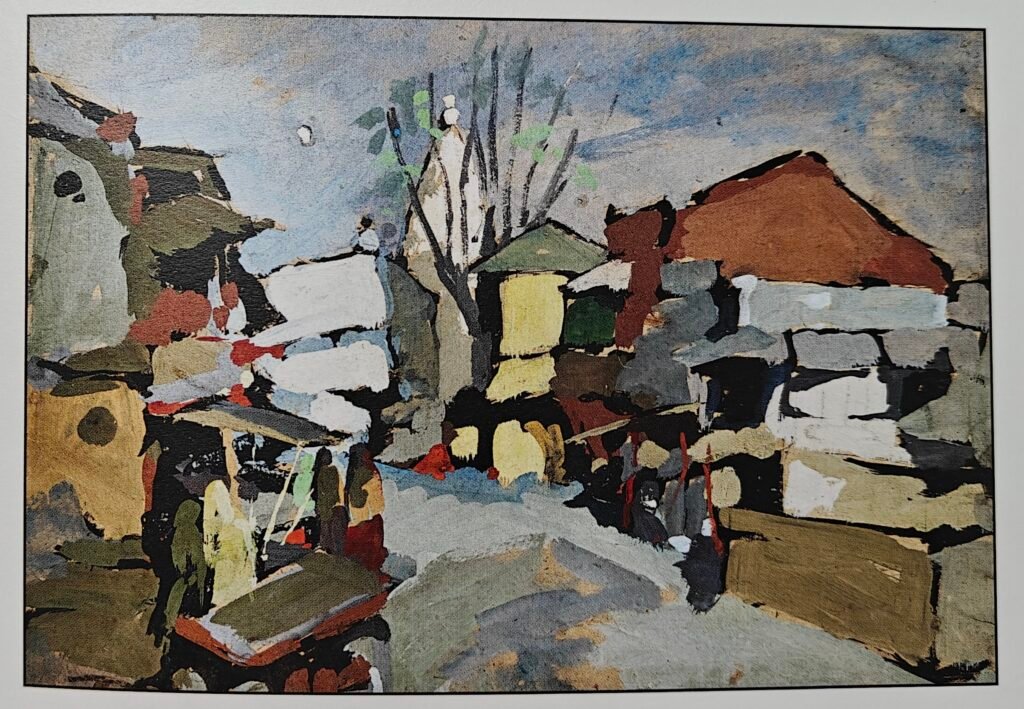
The luminous landscapes by Pathan are a treat to the eyes as they bring alive the now lost pastoral characteristic of his native Dewas in modernist strokes, which bring his paintings at par with any created by the leading artists in Bombay at the same time. Pathan created some truly captivating portraits in the same modernist strokes.
It is his landscapes, however, that deserve a closer look as they bear signs of evolving quickly into abstract works because they already carry elements of disintegrating form—one can almost see the future formless works in those lucid landscapes.
The apotheosis of Pathan’s art lay in these very abstract works—formless creations that speak a very profound language of curiosity, as if giving expression to a superlative piece of music, upon hearing which one starts walking inevitably to the source of that music. The exhibition brought focus on these very works—swathes of iridescent colour gliding across a canvas, punctured hither and thither by sharp lines, or some nebulous geometric shape, or overhanging stories of the past in the form of metallic cobwebs, or white light drawing attention to an abstract mountainous landscape, or the wiremesh like fragile shapes created using thin strokes, perhaps from the end of the brush… the readings can be innumerable but all captivating.
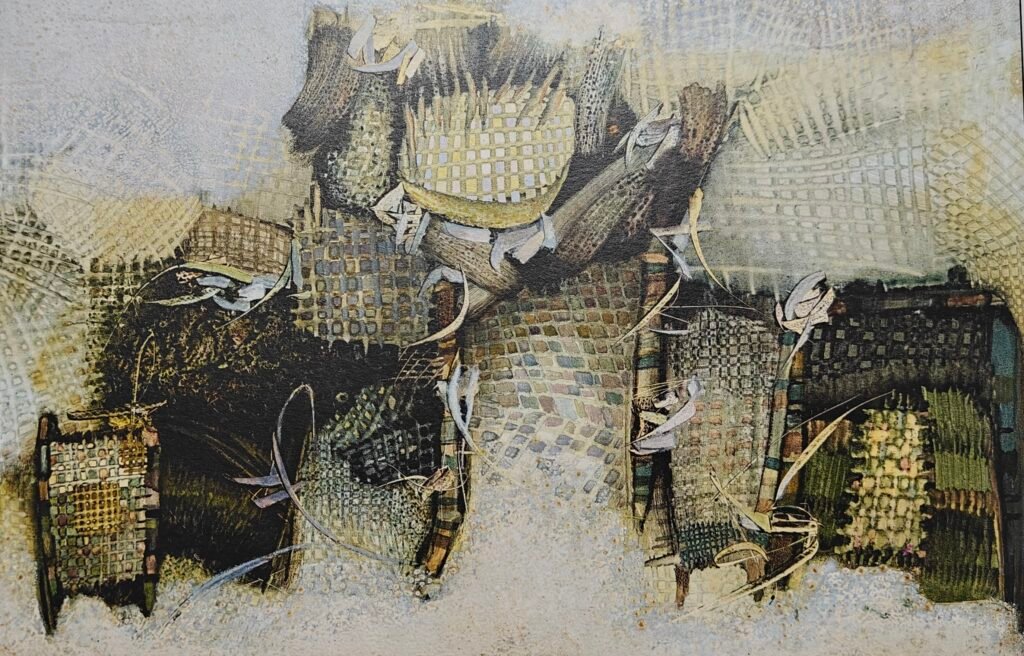
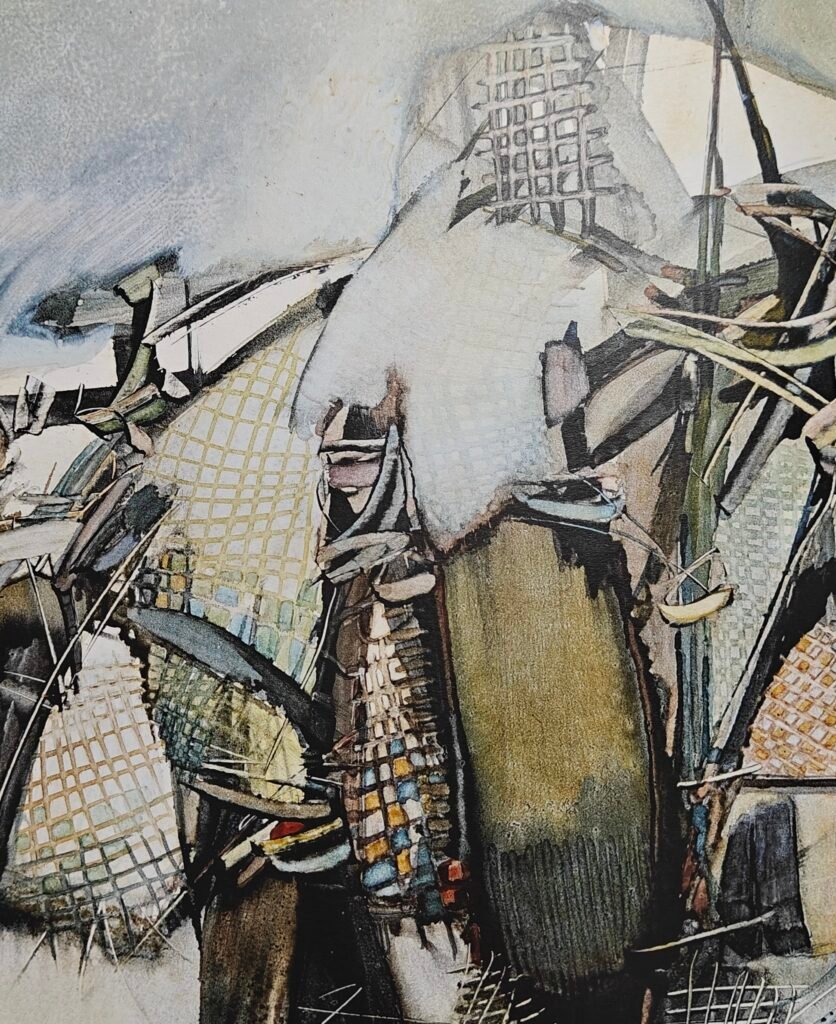
Just as one sees Walter Langhammer’s influence on Pathan’s landscapes, some traces of modernist influence of Bimal Das Gupta and Ambadas can be seen here and there; but that may be more a result of subliminal influence rather than an explicit ode to another painter’s style.
I am glad I was able to visit this exhibition and see first hand the brilliant works of an artist that I was so unfortunate to have not known so far. Had Afzal Pathan not joined the Madhya Pradesh Government’s higher education department as an assistant professor and risen further in that field, his art would not have remained confined to the undiscovered corridors of art.
He deserved this exhibition in his lifetime, and the glory it may have put in action.